Hey there, fellow tech enthusiasts and art lovers! Have you ever scrolled through your feed and stopped dead in your tracks, wondering if that stunning image was real or dreamed up by an AI?
Because I know I have, more times than I can count lately! The world of artificial intelligence isn’t just crunching numbers anymore; it’s painting masterpieces, composing symphonies, and truly pushing the boundaries of what we thought creativity could be.
From mind-blowing generative art platforms like Midjourney and DALL-E to technologies that are literally reshaping entire industries, it feels like we’re living in a science fiction novel, and honestly, I’m here for it.
I’ve been diving deep into these emerging tech currents, experimenting with these incredible tools myself, and what I’ve discovered is nothing short of revolutionary.
This isn’t just about cool new gadgets; it’s about a paradigm shift in how we create, innovate, and even perceive art itself. Imagine the possibilities when human ingenuity meets machine brilliance, crafting visuals that would have been unimaginable just a few years ago.
It’s a journey into uncharted territory where artists are finding new brushes and creators are unlocking previously hidden dimensions of expression. This blending of art and AI is sparking so many conversations about originality, ownership, and the very definition of what it means to be an artist.
Ready to explore how AI is redefining creativity and what it means for our future? Let’s dive into the fascinating details below!
When Code Meets Canvas: The AI Art Revolution Takes Center Stage
The Rise of Generative Art: From Pixels to Masterpieces
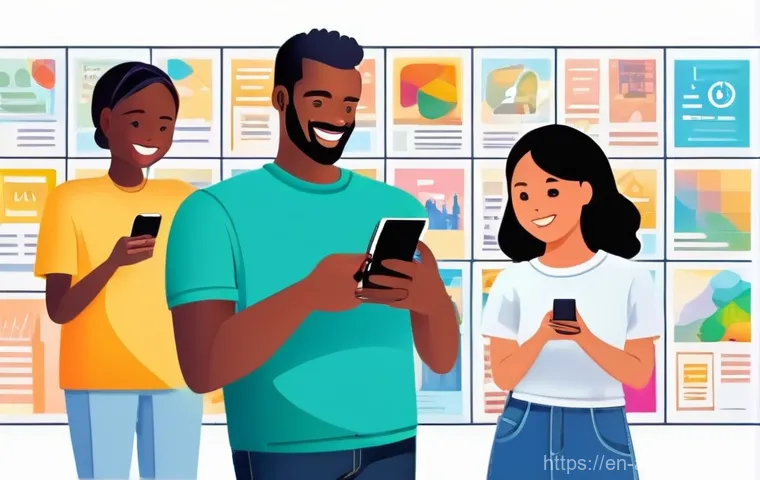
Honestly, it feels like just yesterday we were marveling at simple algorithms creating basic patterns, and now, we’re witnessing AI conjure up breathtaking visuals that truly blur the lines between human and machine creation.
I’ve been completely captivated by this explosion of generative art. Platforms like Midjourney, DALL-E, and Stable Diffusion aren’t just tools; they’re gateways to entirely new dimensions of artistic expression.
It’s a genuine revolution, allowing anyone with an idea and a keyboard to become a digital alchemist, transforming words into intricate scenes, vibrant portraits, or abstract wonders.
When I first saw the quality of images these AIs were producing, my jaw literally dropped. It wasn’t just impressive; it was *stunning*. The ability to generate art in a myriad of styles, from hyperrealism to surreal fantasy, with such speed and precision, has fundamentally changed how we perceive creativity and its boundaries.
It’s like suddenly every person has a super-powered digital art studio at their fingertips, and the output can be truly astounding, often sparking debates about authorship and the very essence of art itself.
Democratizing Creativity: Tools for Everyone
What’s truly remarkable about this AI art boom is how it’s democratizing creativity. You don’t need years of art school, expensive software, or a steady hand to bring your wildest imaginings to life anymore.
With a few well-crafted prompts, anyone can generate visuals that would have taken a professional artist hours, if not days, to create. I’ve seen friends who never considered themselves artists create truly beautiful and thought-provoking pieces just by playing around with these tools.
It’s empowering, offering a new outlet for self-expression to a broader audience than ever before. This accessibility is fostering a whole new wave of digital artists and enthusiasts, creating vibrant online communities where people share their prompts, techniques, and mind-bending creations.
The sheer joy of seeing your vision materialize almost instantly, even if it’s just for fun or a personal project, is incredibly addictive. It’s genuinely exciting to be part of a movement that’s breaking down traditional barriers to artistic creation, making it a more inclusive and dynamic space.
Beyond the Hype: My Hands-On Journey with Generative AI
My First Forays: Prompts, Parameters, and Pure Amazement
When I first dipped my toes into the world of AI art, I was equal parts excited and a little overwhelmed. There’s a learning curve, for sure, and it’s not just about typing a few words.
Crafting the perfect prompt feels like an art form in itself! I remember my very first attempts – clunky, sometimes nonsensical images that made me laugh.
But then, slowly, as I learned about parameters, negative prompts, and iterating on descriptions, something clicked. The moment I typed a nuanced prompt and saw the AI generate something eerily close to what I had envisioned, it was pure magic.
It felt like I was communicating with a sentient creative entity, guiding it with my words. I spent hours tweaking prompts, adding details about lighting, style, and composition, watching in amazement as the AI rendered increasingly sophisticated and beautiful images.
It’s a truly interactive experience, almost like a creative dialogue where you provide the seed, and the AI helps it blossom into something magnificent.
The Learning Curve: Getting the AI to “Understand” My Vision
It wasn’t always smooth sailing, though. There were definitely moments of frustration, trying to get the AI to “understand” the subtle nuances of my vision.
Sometimes it felt like a game of charades, trying to articulate a complex idea with limited vocabulary. I quickly learned that specificity is key, and sometimes, less is more.
Experimenting with different models and their unique strengths became a fascinating puzzle. What worked beautifully on Midjourney might produce something entirely different on DALL-E, and understanding these idiosyncrasies is part of the fun.
I’ve spent countless hours scrolling through forums, watching tutorials, and exchanging tips with other enthusiasts, all trying to unlock the full potential of these incredible tools.
This iterative process, constantly refining my prompts and learning the AI’s “language,” has been incredibly rewarding. It’s pushed my own creative thinking and taught me to articulate my ideas more clearly, which has surprisingly spilled over into other aspects of my life too.
The New Creative Workflow: AI as Your Digital Muse
Collaborating with AI: A New Partnership for Artists
This isn’t just about replacing human artists; it’s about a fascinating new partnership. I’ve talked to so many designers, illustrators, and concept artists who are integrating AI seamlessly into their workflow, and it’s truly inspiring.
Imagine needing to generate a hundred different concepts for a new product design, or a variety of background elements for a game. Before AI, this would be an enormous, time-consuming task.
Now, artists can rapidly generate countless variations, explore different aesthetic directions, and quickly narrow down their options, saving precious time and freeing them up for the more nuanced, human-centric aspects of their craft.
It’s like having an incredibly fast and versatile intern who can churn out ideas and prototypes at warp speed. This collaboration isn’t about giving up control; it’s about amplifying human creativity, allowing artists to explore avenues they might never have considered due to time or resource constraints.
It feels like a genuine evolution in how creative work gets done, making the process more efficient and imaginative.
Expanding Creative Horizons: Styles, Concepts, and Iterations
One of the most thrilling aspects I’ve observed is how AI helps artists break out of creative ruts or explore completely new styles. Ever felt stuck on a project, unsure of which direction to take?
Throwing a few descriptive words into an AI art generator can sometimes spark an entirely fresh perspective, offering a visual prompt that unlocks new ideas.
It’s like a brainstorming partner that never tires and has an encyclopedic knowledge of every art style imaginable. From generating photorealistic architectural renders to fantastical creature designs or abstract compositions, the AI can rapidly iterate through countless visual concepts.
This capability is invaluable for testing out different moods, color palettes, and stylistic approaches without committing significant time to manual creation.
It pushes the boundaries of what’s possible, allowing artists to experiment fearlessly and discover unique visual languages they might not have otherwise encountered.
It truly acts as a springboard for boundless imagination.
Navigating the Ethical Labyrinth: Ownership, Originality, and the Future
Who Owns the Art? A Deep Dive into Copyright Conundrums
This is where things get really interesting, and, if I’m being honest, a bit thorny. The question of who truly “owns” AI-generated art is a hot topic, sparking debates in legal circles, artistic communities, and even my own chats with fellow creators.
If I type a prompt and the AI generates an image, is it my creation? Is it the AI’s? Or is it somehow a derivative of the vast dataset it was trained on?
Current copyright laws, largely conceived before the age of artificial intelligence, are struggling to keep up. Different jurisdictions are taking different stances, and there’s no universal agreement yet.
Some argue that the human input – the prompt engineering, the curation, the artistic intent – should be sufficient for ownership, while others point to the machine’s role in generating the actual pixels.
It’s a complex issue with profound implications for artists, developers, and intellectual property. I’m personally following these developments very closely, because how this shakes out will undoubtedly shape the future of digital art and creative industries.
The Definition of “Artist” in an AI-Enhanced World
Beyond legal ownership, there’s a more philosophical debate brewing: what does it mean to be an “artist” when a machine can create stunning visuals from a few words?
Does an artist need to physically wield a brush or sculpt clay? Or is the vision, the concept, the curation, enough? I’ve heard arguments from both sides, from purists who feel AI art diminishes human skill to those who embrace it as a legitimate new medium.
Personally, I believe the definition of artistry is expanding. Just as photography challenged traditional painting, and digital art challenged traditional media, AI art is simply another evolution.
The artist’s role might shift from manual execution to conceptualization, prompting, and refinement. The ability to envision something truly unique and guide a powerful tool to bring it to fruition still requires immense creativity and skill.
It’s a fascinating, sometimes challenging, conversation, but one that ultimately pushes us to re-examine what we value in art and human expression.
Monetizing Machine Masterpieces: Turning Pixels into Profit
The Commercial Appeal: Brands, Businesses, and Bespoke Art
For those of us looking to turn our passion into profit, AI art offers some truly fascinating avenues. Businesses, especially in marketing, advertising, and design, are quickly realizing the immense potential.
Imagine a brand needing unique imagery for a campaign, or a small business requiring bespoke illustrations for their website, but without the budget for a traditional artist.
AI-generated art can fill that gap beautifully, offering high-quality, customized visuals at a fraction of the cost and time. I’ve seen AI art being used for everything from captivating social media graphics and engaging blog post headers to unique merchandise designs and even book covers.
The speed at which you can generate diverse concepts makes it incredibly attractive for commercial clients who need quick turnarounds and a wide range of options.
This isn’t just about churning out generic images; it’s about crafting visuals that resonate, tell a story, and capture attention, often with a unique aesthetic that stands out.
NFTs and Beyond: Digital Collectibles and AI Art Markets
The intersection of AI art and NFTs (Non-Fungible Tokens) has also opened up entirely new monetization models. While the NFT market has had its ups and downs, the fundamental concept of digital ownership and verifiable scarcity has provided a powerful framework for AI artists.
Creators can mint their unique AI-generated pieces as NFTs, giving collectors a verifiable proof of ownership on the blockchain. This has fostered a thriving marketplace for digital art, allowing artists to connect directly with collectors and potentially earn royalties on resales.
Beyond NFTs, there are platforms dedicated to selling AI prints, licensing AI-generated patterns for textiles, or even offering custom AI art commissions.
The sheer versatility of AI-generated content means that creators can explore various revenue streams, from selling one-off pieces to creating entire collections or even offering subscriptions for exclusive AI art content.
It truly feels like a new frontier for digital entrepreneurship.
The Future is Now: What’s Next for AI in Creativity?
Immersive Experiences: AI in VR, AR, and Interactive Art
Looking ahead, it feels like we’re just scratching the surface of what AI can do in the creative realm. I’m particularly excited about its integration with immersive technologies like Virtual Reality (VR) and Augmented Reality (AR).
Imagine entering a VR world where the environments and characters are dynamically generated by AI in real-time, adapting to your movements and choices.
Or AR experiences where AI can instantly transform your surroundings into a living artwork. We’re talking about truly interactive art installations that respond to human presence, creating deeply personal and ever-evolving experiences.
The potential for AI to create dynamic, responsive, and personalized immersive content is mind-boggling. It could revolutionize everything from gaming and entertainment to educational experiences and therapeutic applications, making digital worlds feel more alive and responsive than ever before.
This is where AI moves beyond static images and starts creating entire universes for us to explore.
Beyond Visuals: AI’s March into Music, Literature, and More
While AI art has captured a lot of headlines, let’s not forget that AI’s creative march extends far beyond visuals. I’ve been fascinated by AI-composed music, which can generate entirely new melodies, harmonies, and orchestrations that evoke a wide range of emotions.
There are AIs writing poetry, generating compelling narratives, and even assisting with screenwriting. Think about personalized soundtracks for your daily commute, or AI-generated short stories tailored to your specific preferences.
The boundaries are truly blurring, and it’s exciting to imagine a future where AI isn’t just creating, but also collaborating with us across all artistic disciplines.
This integration will not only expand the horizons of creation but also challenge our understanding of what constitutes original thought and human expression across various forms of media.
The possibilities are genuinely endless, and I’m here for every single step of this amazing journey!
| AI Art Platform | Key Features & Benefits | Typical Use Cases |
|---|---|---|
| Midjourney | Known for artistic, painterly outputs; excellent for evocative and imaginative concepts. | Concept art, character design, abstract art, illustrative projects. |
| DALL-E 3 | Integrates well with natural language, strong at understanding complex prompts; offers diverse styles. | Story illustration, product visualization, unique graphics, detailed scene generation. |
| Stable Diffusion | Open-source, highly customizable, allows for local installation and fine-tuning; strong community support. | Personalized art generation, niche content creation, experimental projects, custom models. |
| Leonardo.ai | Focuses on game asset generation, texturing, and 3D models; user-friendly interface with diverse tools. | Game development, asset creation, textured models, fantasy art, quick concept generation. |
Closing Thoughts
And there we have it, friends! What a wild and wonderful ride this AI art revolution is. From those initial, slightly pixelated experiments to the truly astounding masterpieces we see today, it’s clear we’re living through a pivotal moment in creative history. I’ve personally found so much joy and inspiration diving into these tools, seeing my craziest ideas spring to life with just a few well-chosen words. It’s more than just technology; it’s a whole new language of creativity, constantly evolving and challenging our preconceived notions of what art can be. I truly believe that embracing this era of digital collaboration will unlock unimaginable potential for artists and enthusiasts alike, and I, for one, can’t wait to see what incredible wonders we’ll conjure up next.
Useful Information to Know
1. Prompt Engineering is Your Superpower: Don’t just type a few words and expect a masterpiece! Learning to craft detailed, descriptive, and often iterative prompts is crucial. Think about style, mood, lighting, composition, and even negative prompts to guide the AI effectively. It’s an art in itself, and the more you practice, the more astonishing your results will be.
2. Different AI Models Have Different Personalities: Just like human artists have unique styles, Midjourney, DALL-E, Stable Diffusion, and others each have their strengths and quirks. Midjourney often excels at more painterly, artistic aesthetics, while DALL-E 3 integrated with ChatGPT can handle incredibly complex, natural language prompts. Experiment with different platforms to find the one that best suits your creative vision.
3. The Community is a Goldmine of Knowledge: Seriously, you don’t have to figure this out alone. Join Discord servers, Reddit communities, and online forums dedicated to AI art. People generously share prompts, techniques, tutorials, and inspiration. It’s an incredible resource for learning, troubleshooting, and connecting with fellow digital alchemists.
4. Stay Informed on Ethical and Copyright Discussions: This space is evolving rapidly, and so are the conversations around ownership, fair use, and the ethical implications of AI art. Keeping an eye on legal developments and industry debates, especially regarding commercial use, is incredibly important for anyone looking to monetize their creations or simply understand the landscape.
5. Embrace the Journey of Continuous Learning: AI technology moves at lightning speed. What was cutting-edge yesterday might be standard today, and new features or models are constantly emerging. Treat it as an ongoing learning adventure, always exploring new updates, techniques, and ways to push the boundaries of what’s possible. It’s an exciting time to be a creator!
Key Takeaways
The AI art revolution is fundamentally reshaping the creative landscape, making artistic expression more accessible than ever before. It’s a powerful collaboration between human vision and machine capability, democratizing creativity and opening up new avenues for innovation across various fields. While it sparks important discussions around ownership and the definition of artistry, the potential for monetization through bespoke art, digital collectibles, and commercial applications is vast. As we look ahead, AI’s role in creating immersive, dynamic experiences and extending into other artistic domains like music and literature promises an incredibly exciting and continuously evolving future for creativity.
Frequently Asked Questions (FAQ) 📖
Q: So, what exactly is
A: I-generated art, and how can a computer possibly “create” something beautiful? A1: Ah, this is the burning question, isn’t it? When I first stumbled upon this, I thought, “No way a machine can feel or imagine!” But here’s the scoop: AI-generated art, at its heart, is artwork created with the help of artificial intelligence, often using what we call “generative AI” tools.
Think of platforms like Midjourney or DALL-E, which I’ve spent countless hours playing around with. How it works is surprisingly elegant and, honestly, a bit magical.
You, the human, give the AI a “prompt” – a detailed text description of what you envision. It could be “a futuristic cityscape at sunset with flying cars” or “a whimsical cat wearing a top hat drinking tea in a Victorian parlor.” The AI then taps into its vast knowledge base, which consists of millions (or even billions!) of images and text it’s been “trained” on.
Using complex algorithms and neural networks, it finds patterns and styles from all that data and essentially learns how different elements look and combine.
Then, it uses this understanding to generate a brand-new image that matches your prompt. It’s like giving a super-fast, incredibly well-read artist a detailed brief, and they just… conjure it up!
It’s not “feeling” in the human sense, but it’s synthesizing information and creating something truly novel based on what it’s learned. And trust me, the results can be breathtakingly beautiful and imaginative, sometimes even surpassing what I could ever dream up myself!
Q: I’m totally new to this, but I’m dying to try! How can a complete beginner like me start making my own
A: I art? A2: That’s the spirit! And honestly, the best part about this whole AI art revolution is how incredibly accessible it’s become for everyone, regardless of your artistic background.
I’m no Picasso, but I’ve created some pieces I’m genuinely proud of with these tools. To get started, you don’t need fancy equipment or even a paintbrush!
You just need an idea and one of the many user-friendly AI art generators out there. My top recommendations for beginners are usually DALL-E 3 (often integrated into ChatGPT, making it super intuitive) or Midjourney.
DALL-E 3 is fantastic for understanding and interpreting your prompts literally, while Midjourney often excels at creating more artistic, moody, and photorealistic visuals.
Here’s a quick rundown of how I’d suggest you dive in:
1. Pick Your Playground: If you’re already a ChatGPT Plus subscriber, DALL-E 3 is right there, ready to go.
If you prefer something with a more artistic flair and don’t mind learning a slightly different interface, Midjourney (accessed via Discord) is brilliant.
Both offer a free tier or trial, so you can test the waters! 2. Craft Your Prompt: This is where the magic really begins.
Be descriptive! Instead of “a dog,” try “a fluffy golden retriever puppy wearing a tiny wizard hat, casting a sparkling spell in a moonlit forest, digital painting.” Experiment with adjectives, styles (e.g., “watercolor,” “cyberpunk,” “photorealistic”), and moods.
3. Generate and Iterate: Type your prompt and hit “generate.” Don’t be discouraged if the first few attempts aren’t exactly what you pictured. This is where the fun is!
Adjust your prompt, add more details, or try different phrasing. I’ve personally spent hours tweaking prompts, and each small change can lead to vastly different, often unexpected, and amazing results.
It’s a journey of discovery, and you’ll quickly learn what kind of descriptions yield the best images. 4. Explore and Share: Many platforms have vibrant communities where people share their prompts and creations.
It’s a fantastic way to get inspiration and learn new tricks! Seriously, jump in! You’ll be amazed at what you can create.
Q: This new era of
A: I art sounds incredible, but it also sparks a lot of conversation. What does this mean for human artists? Will AI replace them?
A3: Oh, this is a question that often comes up in my discussions with fellow creators, and it touches a deep chord. It’s natural to feel a mix of excitement and apprehension when such powerful new tools emerge, especially in a field as personal as art.
From my perspective, and after watching this space evolve rapidly, I genuinely believe AI isn’t going to replace human artists. Instead, it’s redefining and expanding what it means to be an artist.
Think of it this way: when photography was invented, painters didn’t disappear; their role simply evolved. Photography captured reality, freeing painters to explore abstract ideas and deeper emotional expression.
AI is doing something similar. It’s becoming a powerful new tool, a collaborator, for artists. I’ve seen artists use AI to quickly visualize concepts, explore countless styles and iterations in minutes, or even generate elements they can then incorporate into their traditional or digital art, saving immense amounts of time in the conceptualization phase.
Of course, there are legitimate concerns about copyright, fair compensation, and the potential for AI to devalue certain types of creative work. We’re in a critical phase where these ethical and legal frameworks are still being worked out.
However, I personally feel the unique blend of human emotion, intuition, life experience, and storytelling that artists infuse into their work is something AI, as a machine, simply cannot replicate.
AI learns patterns; it doesn’t feel joy or sorrow, or express a deeply personal narrative in the way a human artist does. I’ve observed that the presence of AI art can actually enhance the perceived value of human-made art, making people appreciate the human touch even more.
It’s fostering a new kind of “synthography” where humans and machines create together, pushing boundaries we never thought possible. So, rather than a replacement, I see AI as an incredible new brush in the artist’s toolkit, opening up new genres, new possibilities, and challenging us to think more deeply about what creativity truly means.
It’s an exciting, albeit sometimes complex, time to be a creator!