Hey everyone, it’s your favorite digital art enthusiast dropping in! You know, it feels like just yesterday we were all collectively gasping at those initial AI-generated images, wondering if our creative days were numbered.
I certainly had my moments of “What now?!” when I first saw what those algorithms could whip up. But honestly, watching this space evolve has been nothing short of fascinating, and what I’ve discovered is truly exciting.
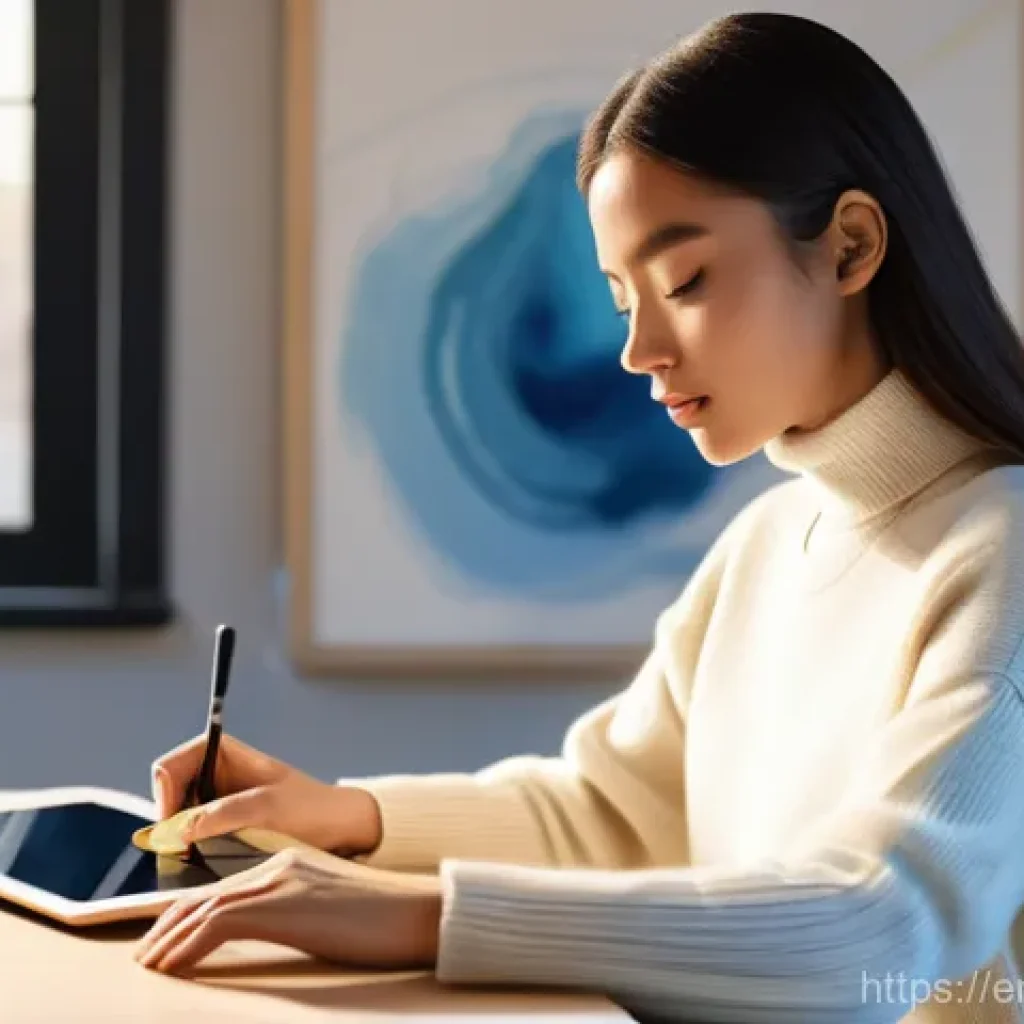
It’s less about AI taking over and more about how it’s becoming this incredible partner, pushing us to redefine what creativity even means. We’re seeing artists use these tools not just for a quick fix, but to explore entirely new frontiers, blending their unique vision with algorithmic brilliance in ways that were unimaginable even a couple of years ago.
From crafting bespoke visuals with text prompts to experimenting with truly mind-bending new mediums, the synergy between human and AI is opening doors for an explosion of innovation.
It’s not always smooth sailing – we’ve definitely got some big conversations around ethics and ownership to navigate – but the potential for enhancing our creative superpowers?
That’s truly limitless. Ready to dive into the exciting world where human ingenuity meets artificial intelligence? Let’s get into the specifics!
Unlocking Your Inner Maverick: AI as Your Creative Co-Pilot
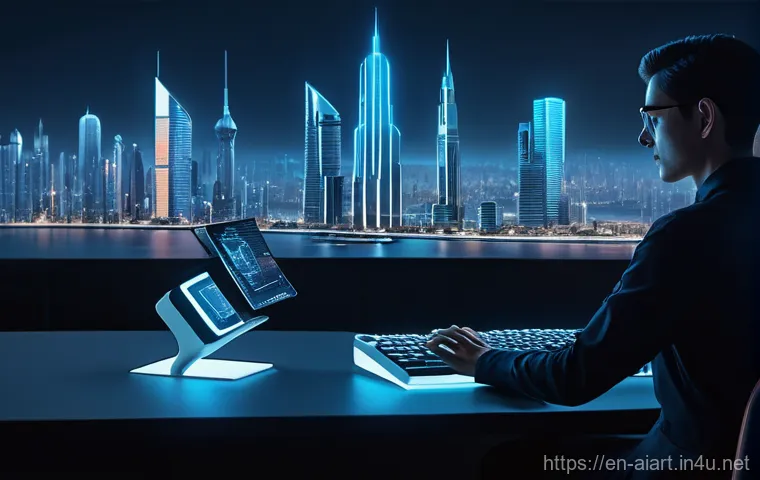
You know, for a while there, when I first started seeing what these incredible AI tools could do, I had this little pang of fear, thinking, “Is my creative spark about to be replaced?” But honestly, it’s been the exact opposite. What I’ve found is that AI isn’t here to take over; it’s here to empower us, to be that ultimate creative co-pilot you never knew you needed. Think of it as having a tireless assistant who can brainstorm with you for hours, pull up visual references in seconds, or even take your rough idea and show you a dozen variations before you’ve even had your first coffee. It’s like suddenly having access to an infinite well of inspiration, helping you break through creative blocks and explore avenues you might never have considered on your own. My own experience has shown me that when you combine your unique human vision and intuition with the raw processing power of AI, that’s when the real magic happens. It’s about leveraging these tools to amplify *your* voice, not to replace it. This synergy is what truly excites me, as it opens up a playground for innovation that feels limitless.
Beyond the Blank Canvas: Finding New Starting Points
One of the biggest game-changers for me has been how AI helps me overcome the dreaded “blank canvas syndrome.” We’ve all been there, right? Staring at an empty screen, waiting for inspiration to strike. Now, instead of endlessly sketching or trying to conjure an idea from thin air, I can throw a few keywords or even a rough doodle into an AI art generator. What comes back isn’t necessarily the final piece, but a springboard – a collection of unexpected interpretations, color palettes, or compositional ideas that immediately kickstart my own imagination. It’s like having a brainstorming partner who never runs out of fresh perspectives. I’ve found myself exploring entirely new styles and themes simply because an AI prompt nudged me in a direction I hadn’t initially considered, pushing my creative boundaries in the best possible way. This collaborative ideation process has dramatically reduced the time I spend stuck, letting me dive straight into refining and expressing my vision.
Amplify Your Artistic Vision: From Concept to Completion
It’s not just about the starting point, though; AI tools have become invaluable throughout my entire creative process. Once I have a core concept, I can use AI to quickly iterate on different elements. Need to see how a specific texture would look on an object? AI can generate variations in moments. Want to experiment with a thousand different lighting scenarios for a scene? It’s no longer an hours-long task. This rapid prototyping allows me to refine my ideas much faster and with a level of precision that would be incredibly time-consuming otherwise. I’ve personally used it to quickly mock up branding concepts for clients, showing them multiple distinct approaches in the time it used to take me to perfect just one. This efficiency frees up my time to focus on the truly human aspects of creation: the storytelling, the emotional resonance, and injecting that unique artistic soul that only a human can provide.
Beyond the Brushstroke: Redefining Artistry with Algorithmic Tools
When we talk about art, our minds often jump to traditional mediums – paint on canvas, clay in hand, or a digital stylus on a tablet. But what I’ve personally witnessed, and been so thrilled to be a part of, is how AI is blowing open those definitions. We’re not just creating art *with* AI; we’re creating entirely new *forms* of art that wouldn’t exist without it. It’s exhilarating to think that the very act of crafting a detailed text prompt, or training an AI on a specific dataset of your own work, is becoming an art form in itself. I remember spending days learning new software and techniques, and while that skill is still incredibly valuable, AI now lets us leapfrog some of those technical hurdles to focus purely on the conceptual. This shift empowers artists who might not have the traditional technical drawing skills but possess an incredible imaginative vision to bring their ideas to life. It’s truly democratizing creativity in a way we’ve never seen before, allowing for a broader spectrum of voices to contribute to the global artistic conversation.
Venturing into Uncharted Creative Territories
The really exciting part for me is the ability to venture into creative territories that were previously impossible. Imagine generating entire animated sequences from a single description, or creating hyper-realistic landscapes that exist only in your mind’s eye. With AI, these are no longer futuristic pipe dreams but tangible realities. I’ve been experimenting with using AI to generate conceptual art pieces that blend photography with surreal digital painting, achieving a dreamlike quality that would be incredibly difficult, if not impossible, to achieve through traditional means alone. The algorithmic “brain” often comes up with unexpected interpretations of my prompts, leading to serendipitous discoveries that spark even more ideas. It’s like having a constant muse that constantly surprises you, pushing you to explore beyond your comfort zone and to question what “art” can truly be. This continuous loop of inspiration and execution is what keeps me so engaged and excited about this new frontier.
The Craft of Prompt Engineering: A New Artistic Skill
You might think, “Oh, just type some words and get art?” But it’s so much more nuanced and fascinating than that! The skill of “prompt engineering” is rapidly becoming an art form in itself. It’s about understanding how to communicate your vision to an AI effectively, knowing which adjectives evoke the right mood, which artists’ styles to reference for inspiration, and how to structure your prompts to get precise results. I’ve spent countless hours refining my prompting techniques, learning through trial and error, and let me tell you, when you nail that perfect prompt and the AI spits out exactly what you envisioned (or even something better!), it’s an incredible feeling of accomplishment. It’s akin to a photographer mastering their camera settings or a painter learning to mix colors. This new skill set requires creativity, critical thinking, and a deep understanding of artistic principles, making it a legitimate and increasingly valuable part of the modern artist’s toolkit. It’s about learning to speak the language of the machine to unlock its creative potential for your human goals.
The Ethical Canvas: Navigating the New Artistic Landscape
Okay, let’s be real. This isn’t all sunshine and rainbows. With all this incredible innovation, there are definitely some serious conversations we need to be having as a creative community, especially around ethics and ownership. When I first started diving deep into AI art, these questions were immediately at the forefront of my mind. Who owns the copyright to an AI-generated image? What about the datasets used to train these AIs – are artists being compensated fairly if their work is included? These aren’t simple questions with easy answers, and anyone who tells you otherwise probably isn’t looking closely enough. It’s a complex, evolving landscape, and it requires thoughtful consideration from all of us – artists, developers, platforms, and legal experts. Ignoring these issues would be a huge disservice to the artistic community and could stifle the very innovation we’re so excited about. It’s important to advocate for transparent practices and fair compensation models as this technology continues to develop, ensuring that human creativity remains valued and protected.
Fair Play and Compensation: A Call for Transparency
One of the biggest concerns, and one that I personally feel very strongly about, is how we ensure fair play for artists whose work might be used in AI training datasets. Imagine spending years honing your craft, developing a unique style, only for an AI to learn from your work and generate similar pieces without any acknowledgment or compensation. That’s a legitimate worry for many, myself included. While some AIs are trained on public domain images, many also draw from vast collections of copyrighted material, leading to significant ethical dilemmas. We need to push for more transparency from AI developers about their training data sources. Furthermore, exploring new compensation models, perhaps through micro-payments or licensing fees for artists whose work contributes to these datasets, is crucial. It’s about building a future where AI enhances human creativity without exploiting it, fostering a sustainable ecosystem where all artists can thrive, not just those who develop the AI. This is a conversation we absolutely must keep having.
Defining Authorship in the Age of Algorithms
Then there’s the fascinating, and sometimes head-scratching, question of authorship. If I use an AI tool to generate an image based on my prompt, am I the sole author? What if I heavily edit that image afterward? What if the AI generates something completely unexpected that inspires my next human-created piece? These aren’t abstract philosophical debates; they have real-world implications for copyright, intellectual property, and even how we attribute creative credit. I’ve personally wrestled with this when presenting AI-assisted work, always trying to be clear about the tools used while emphasizing my creative input. It forces us to reconsider our traditional definitions of what it means to “make art” and who gets credit. As the lines blur, we need clear guidelines and legal frameworks that respect both human ingenuity and the contributions of artificial intelligence, allowing for innovation while protecting the rights of creators. It’s a brave new world, and we’re all trying to figure out the rules of engagement together.
Level Up Your Craft: How AI Supercharges Artistic Skill
Let’s talk about leveling up. I often hear people worry that AI will make human skills obsolete, but from my perspective, it’s actually a phenomenal tool for *enhancing* and *accelerating* our artistic development. Think of it as having a highly knowledgeable tutor available 24/7, ready to provide feedback, examples, and endless practice scenarios. I’ve found it incredibly useful for refining my understanding of fundamental artistic principles. For instance, if I’m struggling with a particular composition, I can use an AI to generate various interpretations of my idea, each with subtle differences in balance or focal points. By analyzing these outputs, I gain a deeper, more intuitive grasp of what makes a composition effective. It’s not about letting the AI do the work for you; it’s about using it as a mirror to reflect and amplify your own learning, allowing you to experiment and grow at an unprecedented pace. My own drawing skills have improved significantly just by having AI generate complex reference images that I can then study and draw from multiple angles.
Mastering Fundamentals with Algorithmic Assistance
Whether you’re struggling with perspective, color theory, or anatomy, AI can be an incredible aid. For perspective, you can generate complex architectural scenes and then analyze the vanishing points and lines, understanding how they converge. For color, you can create countless variations of a scene with different lighting and palettes, helping you understand the emotional impact of color choices. I’ve personally used AI to generate dozens of character poses and expressions from simple descriptions, which then became my practice material for improving my figure drawing and understanding of human emotion. It’s like having an infinite library of reference photos, but tailored exactly to your specific needs. This instant feedback loop and personalized learning environment make it an unparalleled tool for artists at any stage of their journey, helping to solidify foundational skills faster and more effectively than traditional methods alone could ever achieve.
Rapid Iteration and Concept Development
Beyond fundamentals, AI is a powerhouse for rapid iteration. In the traditional creative process, experimenting with a wide range of ideas can be time-consuming. You might sketch a few variations, but you’re often limited by time and energy. With AI, that limitation shrinks dramatically. You can generate hundreds of concepts for a character, a logo, or an environment in minutes. This allows you to explore vastly more options before settling on a direction, ensuring you’re making the most informed creative decisions. I’ve found this particularly useful in client work, where I can present a broad spectrum of initial ideas much faster, getting to the core of their vision efficiently. This frees up precious time later in the project to focus on the intricate details and polish that truly make a piece shine. It’s a game-changer for anyone looking to accelerate their creative output and explore more possibilities without burning out.
From Concept to Canvas: Streamlining Your Creative Workflow
Alright, let’s get down to the practicalities. One of the biggest wins for me, and something I hear countless other artists raving about, is how AI tools have utterly transformed and streamlined our creative workflows. Before, certain stages of a project felt like grinding through gears – tedious, repetitive tasks that, while necessary, drained creative energy. Now? Many of those processes can be significantly accelerated or even automated, leaving us more time and mental space for the actual act of creation and problem-solving. Imagine cutting down hours of tedious background removal, image upscaling, or even just generating multiple variations of a texture from days to minutes. That’s the kind of everyday magic AI brings to the table. It’s not just about speed; it’s about shifting our focus from the mundane to the meaningful, allowing our creative energy to be directed where it truly matters – injecting that unique human touch and narrative into our work. This efficiency, I’ve found, directly translates to less burnout and more joy in the creative process.
Automating the Mundane, Amplifying the Magnificent
For me, personally, the biggest impact has been on the automation of repetitive tasks. I used to spend a considerable amount of time on things like masking complex images, generating endless iterations of minor design elements, or manually cleaning up pixelated assets. Now, AI-powered tools handle these chores with remarkable speed and accuracy. This doesn’t mean I’m just sitting back; it means I’m reallocating that energy to refining the overall concept, focusing on storytelling, or experimenting with new artistic techniques that truly add value. It’s like having a team of digital assistants working tirelessly in the background, allowing me to focus on the big picture. This shift has not only made my workflow more efficient but has also allowed me to take on more ambitious projects, confident that I won’t get bogged down in the minutiae. It genuinely feels like I’ve added extra hours to my day purely for creative exploration.
Real-Time Feedback and Dynamic Ideation
Another incredible aspect of integrating AI into the workflow is the ability to get real-time feedback and engage in dynamic ideation. Instead of waiting for a client or peer review, I can use AI to quickly visualize how different design choices might look. If I’m designing a poster, I can generate dozens of layout variations with different fonts, color schemes, and image placements in moments. This immediate visual feedback helps me make informed decisions much faster, often catching potential issues before they become deeply embedded in the design. It’s like having an instant focus group at your fingertips. This dynamic process allows for a much more fluid and exploratory approach to design, where ideas can be tested, refined, and discarded with minimal effort, ensuring that the final output is truly the best it can be. This table outlines some key benefits I’ve observed:
| Workflow Aspect | Pre-AI Integration | Post-AI Integration Benefits |
|---|---|---|
| Ideation & Brainstorming | Time-consuming, prone to creative blocks, limited by individual knowledge. | Rapid generation of diverse concepts, overcoming blocks, broader stylistic exploration. |
| Repetitive Tasks (e.g., masking, upscaling) | Manual, tedious, time-intensive, potential for human error. | Automation, significant time savings, increased accuracy, higher quality output. |
| Iteration & Refinement | Slow, costly to explore many variations, limited by rendering times. | Fast generation of variations, real-time visual feedback, cost-effective experimentation. |
| Asset Creation (e.g., textures, backgrounds) | Requires sourcing or manual creation, often generic or time-consuming. | Custom-generated assets, unique textures, tailored backgrounds, immense time savings. |
The Future is Now: What’s Next for Human-AI Synergy in Art
It’s truly a wild ride, isn’t it? If you told me five years ago that we’d be where we are today with AI and art, I probably would’ve just blinked at you. The pace of innovation is mind-boggling, and what excites me most is thinking about what’s just around the corner. We’re still in the early stages, folks, and already we’re seeing incredible advancements in areas like personalized AI models that learn your unique artistic signature, or real-time co-creation tools that feel less like a separate entity and more like an extension of your own mind. I believe we’re heading towards an even more symbiotic relationship where the barrier between human intent and algorithmic execution becomes almost seamless. Imagine whispering an idea and seeing it instantly take shape, not as a generic AI output, but imbued with your personal style and emotional depth. That’s the dream, and honestly, it feels more attainable every single day. This isn’t just a trend; it’s a fundamental shift in how we approach and experience creativity, opening up a universe of possibilities that will continue to astonish us.
Personalized AI: Your Style, Amplified
One of the most thrilling prospects on the horizon, from my perspective, is the development of truly personalized AI. We’re already seeing glimmers of this, where artists can train AI models on their *own* body of work, essentially creating an AI apprentice that understands and can generate art in their unique style. This isn’t about the AI stealing your style; it’s about amplifying it, allowing you to scale your creative output, explore new concepts within your signature aesthetic, or even generate preliminary sketches that are perfectly aligned with your artistic voice. I’ve been keeping a close eye on projects that allow this kind of bespoke AI development, and the results are often stunningly consistent with the original artist’s hand. This takes away a lot of the fear of generic AI output and truly puts the artist in the driver’s seat, using the AI as a powerful tool to extend their own unique creative fingerprint. It’s about empowering the individual artist to do more, better, and faster.
The Rise of Interactive and Adaptive Art
Beyond static images, the future is absolutely bursting with possibilities for interactive and adaptive art. Imagine art installations that respond to viewer presence, or digital pieces that evolve and change based on real-time data or even audience input. AI is perfectly suited to drive these dynamic experiences. We’re already seeing fascinating examples in gaming and virtual reality, but the potential for fine art and public installations is immense. I’m picturing galleries where the art literally breathes and shifts, offering a unique experience to every single person who interacts with it. This kind of living, responsive art would redefine how we engage with creative works, moving beyond passive observation to active participation. It’s a truly exciting frontier that blends technology, creativity, and human interaction in profoundly innovative ways, pushing the boundaries of what an “art piece” can actually be.
Showcasing Brilliance: Making Your AI-Enhanced Art Stand Out
So, you’ve harnessed the power of AI, you’ve created some truly unique pieces, and now you want to share them with the world. But how do you make your AI-enhanced art truly stand out in a sea of increasingly sophisticated creations? This is where your human touch, your narrative, and your savvy as an artist become more important than ever. It’s not enough to just press a button and share; you need to curate, refine, and tell the story behind your work. I’ve learned that the artists who are truly making waves in this space are the ones who don’t shy away from their process but instead embrace it, showing how they collaborated with the AI, the prompts they used, and the subsequent human refinements that transformed a good output into a great piece of art. Authenticity and transparency about your creative journey are key in building a loyal audience and establishing your unique voice in this exciting new chapter of art history.
Crafting Your Narrative: The Story Behind the Algorithm
Every piece of art has a story, and AI-enhanced art is no different – in fact, it often has an even more compelling one! Don’t just post the final image; share the journey. Talk about the initial concept, the prompts you experimented with, the unexpected outputs that inspired new directions, and the human refinements you applied. Did you hand-paint over an AI-generated base? Did you combine multiple AI outputs in a unique way? Did you use the AI to generate studies for a piece you then traditionally painted? These details are what captivate audiences and differentiate your work. I’ve personally found that when I share snippets of my process – the rough AI generations alongside my final edited piece – my audience feels a much stronger connection to the work and understands the true collaboration involved. This transparency builds trust and highlights your unique creative input, proving that the human artist remains indispensable.
Curating Your Collection: Quality Over Quantity
With AI’s ability to generate countless images, it can be tempting to share everything. But trust me, in the art world, quality always trumps quantity. Be a meticulous curator of your own work. Select only your strongest pieces, those that genuinely resonate with your vision and showcase the best of your human-AI collaboration. Think about how each piece fits into your overall artistic narrative and what message it conveys. Don’t be afraid to discard outputs that don’t quite hit the mark, even if they were technically “good.” Your audience will appreciate a thoughtfully curated collection that speaks to your unique aesthetic rather than a flood of unrefined generations. This discernment demonstrates your critical eye and reinforces your role as the guiding artistic intelligence behind the work, ensuring that every piece you share contributes positively to your reputation and artistic brand.
Wrapping Things Up
And there you have it, folks! What an incredible journey we’re on, navigating this thrilling new landscape where human creativity meets artificial intelligence. For me, diving into AI as a creative co-pilot has been nothing short of transformative, fundamentally changing how I approach my art and my workflow. It’s truly a testament to how embracing innovation, rather than fearing it, can unlock unimaginable potential. The anxieties about AI replacing human artists are understandable, but my personal experience, and what I’ve witnessed in countless creative communities, points to a future where AI empowers us, amplifies our unique voices, and helps us push the boundaries of what’s possible. It’s not about machines taking over; it’s about a beautiful, synergistic dance between human intuition and algorithmic power. So, go on, explore, experiment, and let your creative spirit soar even higher with these amazing tools!
Handy Tips for Your Creative AI Journey
Here are a few quick tips I’ve picked up along my own path, things I wish someone had told me sooner!
1. Start Small and Experiment Wildly: Don’t feel like you need to create a masterpiece on day one. Begin with simple prompts, play with different styles, and just see what happens. The joy is in the discovery, and often, the most unexpected outputs lead to the greatest breakthroughs. I remember spending hours just trying out different adjectives – “ethereal,” “gritty,” “luminous” – and learning so much about how the AI interprets them.
2. Treat AI as a Collaborator, Not Just a Tool: Think of your AI as a brainstorming partner. Instead of just expecting it to deliver a final piece, use it to generate ideas, explore variations, or even challenge your own assumptions. I often go back and forth with it, refining prompts based on its outputs, almost like a conversation, until we land on something truly exciting.
3. Prioritize Ethical Awareness: As artists, we have a responsibility to engage with AI tools thoughtfully. Research the origins of the datasets used, advocate for fair artist compensation, and always be transparent about the role AI plays in your work. It’s about fostering a respectful and sustainable creative ecosystem for everyone involved.
4. Never Stop Refining Your Human Skills: While AI is incredible, it’s not a substitute for core artistic principles. Use it to enhance your understanding of composition, color theory, and anatomy by generating endless references. My own traditional drawing skills have seriously sharpened from studying AI-generated images that offered perspectives I couldn’t easily find elsewhere.
5. Stay Curious and Connected: The world of AI is evolving at lightning speed. Keep an eye on new tools, techniques, and ethical discussions. Join online communities, follow developers, and share your experiences. The collective knowledge and support from fellow creators can be an invaluable resource in navigating this exciting, ever-changing landscape.
Key Takeaways
Reflecting on everything we’ve covered, it’s clear that AI is not just a passing trend but a fundamental shift in the creative world. We’ve seen how it acts as a powerful co-pilot, helping us overcome creative blocks and explore new artistic territories, freeing us from mundane tasks to focus on the truly impactful aspects of our work. It demands a new level of ethical consideration, urging us to champion transparency and fair compensation for artists. Crucially, AI doesn’t diminish human skill; instead, it supercharges our learning and refines our craft, allowing for rapid iteration and a streamlined workflow. Ultimately, the future of art lies in the dynamic synergy between human ingenuity and algorithmic power, empowering us to tell richer stories and create more profound experiences than ever before. It’s an exciting time to be a creator, and I truly believe the best is yet to come!
Frequently Asked Questions (FAQ) 📖
Q: Is
A: I going to replace human artists, or should we be worried about our creative future? A1: Oh, believe me, I totally get why this is the first question on everyone’s mind!
When I first saw some of those unbelievably realistic AI creations, my jaw dropped and a tiny voice in my head definitely whispered, “Well, there goes my career!” But after diving deep into this world and really experimenting myself, I’ve come to a pretty clear conclusion: AI isn’t here to replace us; it’s here to partner with us.
Think of it less as a competitor and more like the most amazing, super-powered assistant you could ever dream of having in your studio. What I’ve personally found is that the magic truly happens when human ingenuity, our unique perspectives, and our emotional depth meet the algorithmic brilliance of AI.
It’s about leveraging these tools to push beyond what we thought was possible, to explore new styles, or to simply speed up those tedious parts of the creative process so we can focus on the truly inspired moments.
Far from feeling threatened, I now feel incredibly empowered to bring even wilder visions to life. It’s a shift, for sure, but an exciting one where our role as creators becomes about guiding, curating, and infusing our work with that irreplaceable human spark.
Q: I’m super curious about this, but it also feels a bit overwhelming. How can someone like me, who might not be a tech wizard, start using
A: I in my art? A2: That feeling of overwhelm is completely valid, and trust me, you’re not alone! It can seem like a daunting landscape at first.
But here’s the beautiful truth: getting started with AI art is actually way more accessible than you might think. From my own journey, the best advice I can give is just to jump in and play around.
You don’t need to be a coder or understand complex algorithms. Tools like Midjourney, DALL-E, or Stable Diffusion are incredibly user-friendly, often just requiring you to type in what you want to see – literally, a text prompt!
I remember my first few prompts were hilariously vague, and the results were… interesting, to say the least! But that’s part of the fun.
Start with simple ideas, experiment with different descriptive words, and don’t be afraid to fail. There are tons of fantastic online tutorials and communities where people share their prompts and tips, which is how I learned so much myself.
Think of it as learning a new brushstroke or a new photography technique. The key is to see it as an extension of your creative toolkit, not a replacement.
You’ll be amazed at how quickly you start to get the hang of it and discover new possibilities for your artistic expression!
Q: This all sounds amazing, but are there any downsides or ethical things we should be mindful of when we use
A: I for art? A3: Absolutely, and I’m really glad you brought this up because it’s a super important part of the conversation! While the potential for AI in art is truly mind-blowing, it’s not all rainbows and perfectly generated images.
From my perspective, and from what I’ve seen discussed among fellow artists, one of the biggest ethical tightropes we’re walking is around ownership and intellectual property.
Who owns an AI-generated piece? The artist who prompted it? The company that built the AI?
What about the original artists whose work might have been part of the AI’s training data? These are complex questions we’re all grappling with, and honestly, the legal frameworks are still catching up.
Another big one is the potential for misinformation or deepfakes, where AI can create images so realistic they become indistinguishable from reality, which can have some serious implications.
Also, there’s the ongoing discussion about bias in AI models, which can inadvertently perpetuate stereotypes or underrepresent certain groups if the training data wasn’t diverse enough.
I’ve personally made it a point to be transparent when I use AI in my work, and I think that’s a great starting point for all of us. It’s definitely a space where we need to tread thoughtfully, engage in open discussions, and advocate for ethical guidelines that protect creators and ensure responsible innovation.