Hey there, art lovers and tech enthusiasts! If you’ve been anywhere online lately, you’ve probably noticed the electrifying buzz surrounding AI art and its incredible leap into performance art.
It feels like just yesterday we were debating if computers could even *think* creatively, and now, they’re composing symphonies and painting masterpieces that genuinely move you.
I remember stumbling upon an AI-curated exhibition in London last year, and honestly, the way it challenged my perceptions of beauty and authorship was truly eye-opening.
This isn’t just a fleeting trend; it’s a profound evolution that’s reshaping how we define creativity, disrupting traditional art spaces, and opening up entirely new dimensions for artistic expression.
It’s an exciting, sometimes baffling, journey, and one that I’m personally thrilled to explore. So, let’s peel back the layers and discover the incredible story unfolding in the world of AI art and performance!
The Algorithmic Brushstroke: Redefining Artistic Creation
When Pixels Become Palettes: My Journey into AI Visuals
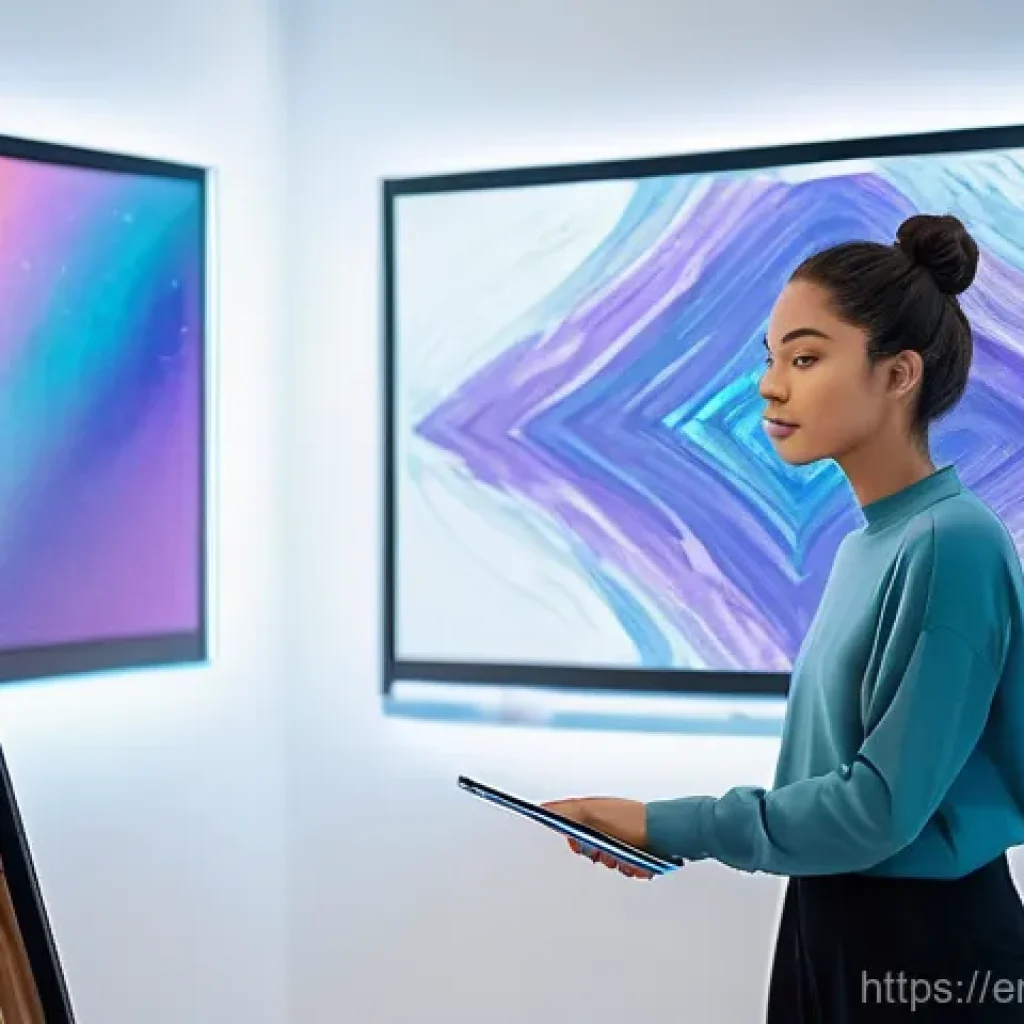
It feels like only yesterday I was sketching in a notebook, painstakingly blending colors to capture a fleeting moment. Fast forward to now, and I’m watching algorithms do the same, but with an almost otherworldly precision and speed.
I remember my first real dive into AI-generated visuals. It wasn’t just a static image; it was a series of evolving pieces displayed at a pop-up gallery in Shoreditch, London, that seemed to breathe with a life of their own.
The sheer variety of styles, from hyperrealistic portraits to abstract, swirling landscapes, made me question everything I thought I knew about artistic intent.
What truly struck me was the emotional resonance some of these pieces evoked. You’d think a computer couldn’t capture melancholy or joy, but there I was, genuinely moved by a digital canvas.
It’s like these models, after being fed millions of images, don’t just mimic; they learn to interpret and extrapolate in ways that are genuinely surprising.
It’s not just about pushing a button and getting a masterpiece; it’s about the nuanced prompts, the careful curation, and the artist’s guiding hand that transforms raw data into something profound.
We’re seeing a new kind of creative partnership emerge, where human intuition meets machine efficiency, opening up a boundless realm of visual storytelling.
Beyond the Canvas: AI in Interactive Installations
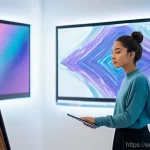
The magic of AI art truly comes alive when it steps off the screen and into our physical world, transforming static exhibitions into dynamic, interactive experiences.
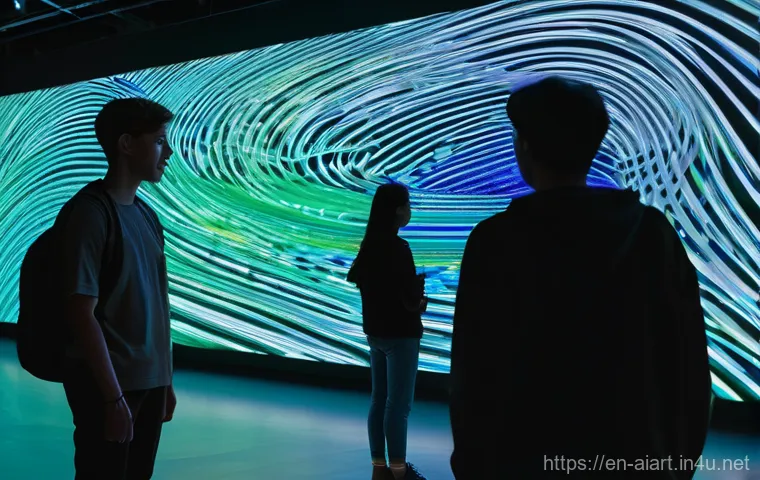
I recall a fascinating installation at the Tate Modern where visitors’ movements and vocal inflections influenced a large-scale projection, constantly morphing colors and shapes.
It wasn’t just observing art; you were actively participating in its creation, becoming a living brushstroke in a digital masterpiece. This shifts the entire paradigm of viewership.
No longer is the audience a passive observer; they are an integral part of the artwork’s evolving narrative. For me, these interactive pieces are where AI art truly shines, offering a deeply personal and often unpredictable experience.
It creates a sense of shared discovery, making each visit unique. The artist here isn’t just a painter or sculptor; they’re more akin to a conductor, orchestrating a symphony of technology and human interaction.
It’s exhilarating to witness how these installations challenge our senses and invite us to rethink our role in the artistic process, transforming spaces into living, breathing entities.
When Programs Take the Stage: The Rise of AI Performance
Orchestrating the Unexpected: AI in Live Music
The energy of a live performance is something truly special, an electric current passing between artist and audience. But what happens when one of those artists is an algorithm?
I’ve seen AI step onto the musical stage, not just as a tool for composition, but as a live performer, reacting and improvising in real-time. My first encounter with this was at a cutting-edge festival in Austin, Texas, where an AI program was generating music on the fly, responding to the movements of a dancer on stage.
The way it seamlessly wove complex melodies and rhythmic patterns, adapting to the human element, was genuinely breathtaking. It wasn’t perfect; there were moments of beautiful dissonance, but that’s what made it feel so organic, so *human*.
This isn’t about replacing musicians, but about expanding the very definition of what a performance can be. It’s about pushing boundaries and creating a symbiotic relationship where human artistry and computational power intertwine to produce something entirely new.
The unpredictability is part of the charm; you never know quite what you’re going to hear, and that keeps audiences utterly captivated.
Digital Dramatists: AI in Theatrical Productions
Theatre has always been a space for bold experimentation, and AI is now adding an entirely new dimension to this age-old art form. I recently saw a fascinating production in New York where an AI played a significant role in generating dialogue and even crafting character arcs based on real-time audience feedback.
It was a bold move, and honestly, a little nerve-wracking for the human actors! But the results were astounding. The AI wasn’t just a script generator; it was a co-creator, adding unexpected twists and emotional depth that challenged both the performers and the audience.
Imagine a play where the narrative subtly shifts based on collective audience sentiment, or where an AI-generated character truly feels like a unique entity.
This kind of dynamic storytelling keeps the audience on the edge of their seats, fostering a deeper, more immersive experience. It forces us to reconsider the roles of authorship and spontaneity in live theatre, blurring the lines between creation and improvisation.
It’s thrilling to think about the untapped potential here, where every performance can truly be a one-of-a-kind event.
Navigating the New Creative Economy: AI’s Impact on Artists
Beyond the Gallery Wall: New Revenue Streams for AI Artists
For artists, the emergence of AI isn’t just about new tools; it’s about an entirely new economic landscape. What I’ve personally observed is a significant shift in how creators monetize their work.
It’s no longer just about selling a canvas; it’s about selling access, unique digital editions, and even the algorithms themselves. I know a few artists who are making a fantastic living by creating custom AI models for clients, generating unique art assets for video games, or even licensing their AI-generated concepts to design firms.
There’s also the burgeoning market for NFTs, which, while volatile, has certainly provided a new avenue for AI artists to prove ownership and scarcity of their digital creations.
This opens up incredible possibilities for artists who might have struggled in traditional markets. The barrier to entry, in some ways, is lower, allowing more diverse voices to emerge and find their audience directly.
It requires a different entrepreneurial mindset, for sure, but the potential for independent creators to build sustainable careers is absolutely massive.
Fair Play or Free Reign? Copyright and AI Art
This is where things get really interesting, and honestly, a little thorny. The question of who owns what when an AI generates art is a hot topic, and one I’ve been following closely.
Is it the person who wrote the prompt? The developer of the AI? The artists whose work was used to train the model?
I’ve seen countless debates erupt online, and legal challenges are popping up globally. From my perspective, we’re in the Wild West of intellectual property, and it’s a critical area that needs clear guidelines to protect both human artists and those who are innovating with AI.
It’s not a simple black-and-white issue, especially when you consider how many models are trained on vast datasets of existing art without explicit consent.
My hope is that we’ll see new legal frameworks emerge that foster innovation while also ensuring fair compensation and recognition for all creators involved.
It’s crucial we get this right to ensure a healthy, equitable future for artistic expression.
| Aspect | Traditional Art Creation | AI Art Creation |
|---|---|---|
| Creative Process | Manual, iterative, deeply personal skill and technique. | Prompt engineering, model training, iterative algorithm refinement, curation of AI output. |
| Time Investment | Can range from hours to years for a single masterpiece. | Seconds to minutes for initial generation, hours to days for refinement and curation. |
| Cost of Tools | Physical materials (paints, canvases), studio space, specialized equipment. | Software licenses, computational power (cloud GPUs), subscription fees for advanced models. |
| Authorship & Ownership | Clearly defined to the human artist. | Complex, debated; involves prompt engineer, model developer, and training data artists. |
| Scalability | Limited by artist’s physical capacity and time. | Highly scalable, can generate numerous variations rapidly. |
The Human-AI Collaboration Canvas: A Symbiotic Future
Beyond the “Us vs. Them” Mentality: Empowering Human Creativity
For a while, there was this palpable fear that AI would simply replace human artists. But what I’ve seen, time and again, is the exact opposite. AI isn’t a competitor; it’s an incredibly powerful collaborator, a muse with infinite possibilities.
I’ve personally experimented with using AI tools to quickly prototype ideas for my blog visuals, saving me countless hours. It allows me to rapidly explore concepts that would have taken days to sketch out, freeing me up to focus on the truly unique, human-centric aspects of my work.
This symbiotic relationship empowers artists to push their boundaries further, to experiment with new styles, and to transcend the limitations of traditional mediums.
It amplifies human creativity rather than diminishing it, offering a whole new suite of tools for expression. Instead of being an “either/or” situation, it’s truly a “both/and” scenario, where the sum is far greater than its individual parts.
It’s about leveraging the machine’s capabilities to elevate our own artistic vision.
The Craft of Prompt Engineering: A New Art Form
If you’re stepping into the world of AI art, you quickly learn that it’s not just about typing a few words and hoping for the best. There’s a genuine *art* to crafting the perfect prompt, and I’ve found myself spending hours refining my phrasing, testing different keywords, and understanding how subtle changes can drastically alter the AI’s output.
It’s like learning a new language, one that communicates directly with a creative intelligence. This “prompt engineering” is a skill in itself, almost a new form of digital craftsmanship.
You learn to visualize the outcome, anticipate the AI’s interpretations, and guide it towards your vision. It requires both technical understanding and a deep sense of artistic intuition.
It’s not passive; it’s an active, engaging process that demands creativity and precision. I’ve been fascinated by how different artists approach this, each developing their unique “voice” in how they interact with these generative models.
It’s a testament to the idea that even with advanced AI, the human touch remains absolutely essential.
Ethical Echoes in AI-Generated Works: A Critical Look
Unmasking Bias: The Unseen Shadows in AI Art
This is a conversation we absolutely *must* have: the inherent biases that can sneak into AI-generated art. Because these models are trained on vast datasets of existing human-made content, they inevitably absorb the biases present in that data.
I’ve personally seen examples where AI, when prompted to create images of certain professions, disproportionately showed men, or when asked for “beautiful” people, consistently produced images fitting narrow Eurocentric beauty standards.
It’s an uncomfortable truth, but one we can’t ignore. The art an AI produces can inadvertently perpetuate harmful stereotypes if we’re not careful about the data we feed it and how we guide its output.
This makes the role of the human artist even more critical – to be aware, to challenge, and to actively work towards more inclusive and diverse AI-generated content.
It’s a reminder that technology is a mirror, reflecting not just our ingenuity, but also our imperfections, and it’s our responsibility to address them.
Beyond the Glare of Innovation: Environmental and Resource Costs
While we marvel at the dazzling creations of AI art, it’s also important to consider the less glamorous side: the environmental footprint. Training these sophisticated AI models requires immense computational power, and that means a significant consumption of electricity.
I’ve read reports detailing the energy expenditure of training some of the larger generative models, and it’s truly eye-opening. While innovation is exciting, we can’t ignore the sustainability aspect.
As the demand for AI art and performance grows, so too will the energy required to fuel it. This isn’t to say we should halt progress, but it certainly calls for more efficient algorithms, greener data centers, and a conscious effort within the AI art community to consider these impacts.
It’s a complex challenge, but one that artists and technologists alike need to grapple with, ensuring that our pursuit of digital beauty doesn’t come at too high an ecological cost.
Wrapping Things Up
This journey through the evolving world of AI in art, music, and performance has been nothing short of exhilarating. What started as a fascinating new tech trend has rapidly blossomed into a pivotal force, reshaping how we conceive, create, and even experience art. It’s clear that rather than dimming the light of human creativity, AI is offering a kaleidoscope of new tools and perspectives, inviting us all to push beyond conventional boundaries. My own experiences, from witnessing live AI music to experimenting with prompt engineering, have shown me that this isn’t just a fleeting moment; it’s a profound shift towards a more collaborative and imaginative future for artists everywhere.
Handy Insights You Won’t Want to Miss
1. Start Small, Dream Big with AI Tools: Don’t feel overwhelmed by the vast landscape of AI art tools out there. Pick one user-friendly platform, like Midjourney or Stable Diffusion, and just start playing. My advice? Treat it like a digital playground where every click is a new discovery. The key is consistent experimentation – try different prompts, explore various styles, and absolutely do not be afraid to make mistakes; that’s where the real, unforgettable learning moments happen. You’ll be amazed at how quickly you develop an intuitive understanding of what works and what doesn’t, slowly refining your unique “eye” for AI-generated visuals and carving out your own niche in this exciting space. It’s truly a journey of endless creative possibilities.
2. Master the Art of Prompt Engineering: Think of prompt engineering not just as giving instructions, but as having a sophisticated conversation with a highly intelligent, albeit literal, artistic assistant. The clearer, more descriptive, and more imaginative you are with your words, the better and more specific the results will be. Instead of just typing “dog,” try “a regal golden retriever, sitting calmly on a sun-drenched porch, with intricate light filtering through autumn leaves, rendered in a hyperrealistic oil painting style with visible brushstrokes.” This level of precision is an absolute game-changer. I’ve personally found that spending those extra minutes crafting detailed, nuanced prompts makes all the difference, transforming generic outputs into truly unique, compelling, and often breathtaking visual narratives that resonate deeply. It’s a skill that pays immense creative dividends.
3. Engage with the AI Art Community: Seriously, if you’re looking for a goldmine of information, inspiration, and genuine connection, this is it! Platforms like Discord, Reddit, and various specialized online forums are brimming with fellow enthusiasts who are generously sharing their tips, tricks, and showcasing their latest mind-bending creations. I’ve personally learned an incredible amount just by observing how others approach prompt engineering, refine their images, and even troubleshoot unexpected challenges. Sharing your own work and getting constructive feedback, or simply soaking in the sheer diversity of what people are creating globally, will supercharge your learning curve and keep your motivation burning bright. It’s a fantastic way to stay incredibly current, connected, and continuously inspired by the collective creativity of the community.
4. Always Be Mindful of Ethical Considerations: As undeniably exciting as the world of AI art is, it’s absolutely crucial to approach it with a keen, critical eye, especially when it comes to the pervasive issues of bias and copyright. Always remember that AI models learn from existing data – and unfortunately, that data often carries inherent human biases. Be acutely aware of the potential for inadvertently perpetuating stereotypes in the art you create and actively strive to generate inclusive, diverse, and representative content. Furthermore, stay diligently informed about the rapidly evolving discussions and legal challenges surrounding intellectual property in the AI art space. This is a rapidly developing area, and being knowledgeable about current debates and best practices will not only help protect your own valuable work but also ensure you respect the rights and creations of other artists, both human and AI-assisted.
5. Explore New Monetization Avenues: The truly wonderful thing about the emergence of AI art is the fresh, innovative opportunities it presents for creators to turn their passion into profit. Beyond simply selling traditional prints, consider venturing into selling your unique and highly effective prompts, offering custom AI-generated artwork as a specialized service to clients, or even delving into the dynamic world of NFTs for authenticating and establishing scarcity for your digital creations. I’ve personally seen artists find incredible success creating unique digital assets for video games, crafting stunning illustrations for burgeoning blogs, or even designing bespoke visual concepts for marketing campaigns. Think expansively and creatively about how your burgeoning AI-generated skills can solve problems or add significant value in entirely new and untapped markets. The economic landscape for AI artists is still very much being defined, which means there’s ample room for pioneers to make a significant impact.
Key Takeaways
The fusion of human creativity with artificial intelligence marks not an endpoint, but a thrilling new beginning for the arts – one that I believe will forever change our creative landscape. What stands out to me most from this fascinating journey is the undeniable power and magic of collaboration. AI doesn’t diminish the artist; it provides an unprecedented extension of their vision, acting as a tireless assistant, an experimental partner, and sometimes, even a surprising and unconventional muse. We’ve seen firsthand how it can transform static exhibitions into truly interactive wonders, add unpredictable and captivating layers to live performances, and open entirely new economic avenues for creators who might otherwise struggle to find their footing in traditional markets. This isn’t just a tool; it’s a paradigm shift.
However, with this incredible power comes profound responsibility. We, as creators and discerning consumers of AI art, must remain critically vigilant about the ethical considerations, such as the inherent biases in training data and the tangible environmental impact of these energy-intensive technologies. It’s a complex and often thorny landscape, one where fundamental questions of authorship, originality, and fair use are still being hotly debated and rigorously defined. Ultimately, the successful and sustainable future of AI in art hinges on a conscious, thoughtful, and ethically grounded approach – one that enthusiastically celebrates innovation while simultaneously upholding the core human values of originality, deep empathy, and responsible stewardship. The creative canvas before us is vast, the tools are extraordinarily powerful, and the indispensable human touch, more than ever, is precisely what will truly define the masterpieces of tomorrow.
Frequently Asked Questions (FAQ) 📖
Q: What exactly is
A: I performance art, and how is it pushing the boundaries of traditional live performances? A1: Oh, this is such a fascinating area, and honestly, it’s where I’ve seen some of the most mind-bending innovations lately!
At its core, AI performance art involves artificial intelligence playing a significant, active role in a live artistic presentation. It’s not just a computer playing pre-programmed music; we’re talking about AI as a collaborator, sometimes even the lead performer.
Think about it: an AI could be generating real-time visuals that react to a dancer’s movements, or composing a unique musical score on the fly based on audience interaction.
I recently experienced a piece in New York where an AI was choreographing drone swarms in sync with a live orchestra, interpreting the conductor’s subtle cues.
It was utterly breathtaking and totally unpredictable, creating an experience that simply couldn’t exist without that blend of human vision and machine intelligence.
This dynamic, responsive nature is what truly sets it apart from traditional performances, offering an ever-evolving, living art piece. It feels less like a fixed show and more like a conversation between humans, technology, and the moment itself.
Q: With
A: I creating such compelling art, does it challenge the very idea of human creativity and authorship? A2: That’s a question that hits right at the heart of the debate, isn’t it?
When I first started seeing AI-generated art, I’ll admit, I had a moment of ‘Wow, where does this leave human artists?’ But after diving deeper and speaking with so many creators, my perspective has really shifted.
I genuinely believe AI doesn’t diminish human creativity; it augments it. Think of it less as a replacement and more as an incredibly powerful new brush, a vast orchestra at your fingertips, or even a co-conspirator in your creative journey.
The human element, the initial spark, the intention, the curation, and the ultimate artistic decisions – these are still undeniably human. We’re teaching the AI, guiding its parameters, and selecting its output.
It’s a tool, albeit a remarkably sophisticated one. Much like photography didn’t kill painting, or synthesizers didn’t end acoustic music, AI is just opening up new avenues for expression.
The authorship shifts from sole creator to a more collaborative, often hybrid, endeavor, where the human vision remains the driving force behind the artificial intelligence’s output.
It’s a beautiful dance, honestly.
Q: How is this rapid rise of
A: I art and performance impacting traditional artists and the established art market? A3: This is a huge, constantly unfolding story, and it’s affecting the art world in so many ways, both exhilarating and, let’s be honest, a little bit scary for some.
On the exciting side, many traditional artists are embracing AI as an incredible new medium. I’ve seen painters use AI to generate concept art for their canvases, sculptors employ algorithms to design intricate forms they couldn’t possibly model by hand, and musicians find new compositional directions.
It’s opening up pathways for experimentation and pushing creative boundaries in ways we’ve never seen. Galleries are also starting to feature AI art prominently, and new collectors are emerging who are specifically interested in this tech-forward genre, creating new revenue streams.
However, there are valid concerns too. Some traditional artists worry about AI devaluing human-made art, the ethical implications of AI training on existing works without consent, and the sheer volume of content that AI can generate, potentially saturating the market.
It’s definitely a double-edged sword, forcing a crucial conversation within the art world about intellectual property, fair compensation, and the evolving definition of “art” itself.
It’s not just disrupting; it’s catalyzing a profound re-evaluation of our entire artistic ecosystem.