Hey everyone, it’s your favorite art enthusiast here, diving deep into the electrifying world where artificial intelligence meets pure artistic genius!
I’ve been absolutely captivated lately by how AI is revolutionizing not just digital painting but also the intricate craft of digital sculpting. It truly feels like we’re standing on the precipice of a brand new creative era, where the line between human imagination and machine capability blurs in the most exciting ways.
From what I’ve seen, artists are no longer “fighting” AI; instead, they’re embracing it as a powerful co-creator, unlocking possibilities that were simply unimaginable a few years ago.
We’re talking about mind-blowing generative art, lightning-fast 3D model creation from simple text prompts, and incredibly realistic digital sculptures that save countless hours of painstaking manual effort.
It’s not just about efficiency, though—it’s about empowering every creator, from seasoned professionals to absolute beginners, to bring their wildest visions to life with unprecedented ease and precision.
This trend of human-AI collaboration is shaping a future where personalized, hyper-realistic, and even immersive art experiences become the norm, pushing the boundaries of what we’ve always considered “art.”This evolution brings up some fascinating questions about authenticity and ownership, but honestly, the sheer potential for innovation keeps me on the edge of my seat.
I’ve personally experimented with some of these tools, and the way they can take a rough concept and instantly transform it into a sophisticated, detailed model is nothing short of magic.
It frees up so much mental space to focus on the truly creative, conceptual aspects, making the artistic journey more fluid and inspiring. I genuinely believe that understanding these cutting-edge tools isn’t just a skill for tomorrow; it’s a necessity for thriving in today’s dynamic digital landscape.
So, if you’re curious about how AI is reshaping the very fabric of digital art and sculpting, and how you can ride this incredible wave of innovation, you’re in for a treat.
Let’s peel back the layers and discover precisely how these groundbreaking technologies are empowering artists worldwide!
Woah, the digital art scene is just exploding, isn’t it? As someone who lives and breathes this stuff, I’m constantly amazed by how fast things are moving, especially with AI jumping into the mix.
It feels like every other week there’s a new tool or technique that completely reshapes what we thought was possible. Forget just drawing on a tablet; we’re talking about crafting entire worlds, generating sculptures from a few words, and basically having a super-powered creative assistant at our fingertips.
I’ve been deep-diving into these new technologies, playing around with them myself, and trust me, they’re not just hype. They’re fundamentally changing how artists, from seasoned pros to total newbies, bring their wildest imaginings to life.
It’s a thrill to watch, and even more thrilling to be a part of. This isn’t about replacing human ingenuity, not in the slightest. What I’ve seen is AI becoming this incredible co-pilot, taking on the heavy lifting of repetitive tasks or sparking completely fresh ideas that I might never have dreamed up on my own.
It frees up so much mental space to focus on the truly creative, conceptual aspects, making the artistic journey more fluid and inspiring. I genuinely believe that understanding these cutting-edge tools isn’t just a skill for tomorrow; it’s a necessity for thriving in today’s dynamic digital landscape.
So, if you’re curious about how AI is reshaping the very fabric of digital art and sculpting, and how you can ride this incredible wave of innovation, you’re in for a treat.
Let’s peel back the layers and discover precisely how these groundbreaking technologies are empowering artists worldwide!
Unleashing Boundless Creativity with AI-Powered Concept Generation
Sparking Inspiration and Overcoming Creative Blocks
You know that feeling when you’re staring at a blank canvas or an empty workspace, just waiting for that perfect idea to strike? It happens to all of us.
But what if you had a muse that could instantly conjure up a million variations on a theme, offering fresh perspectives you might never have considered?
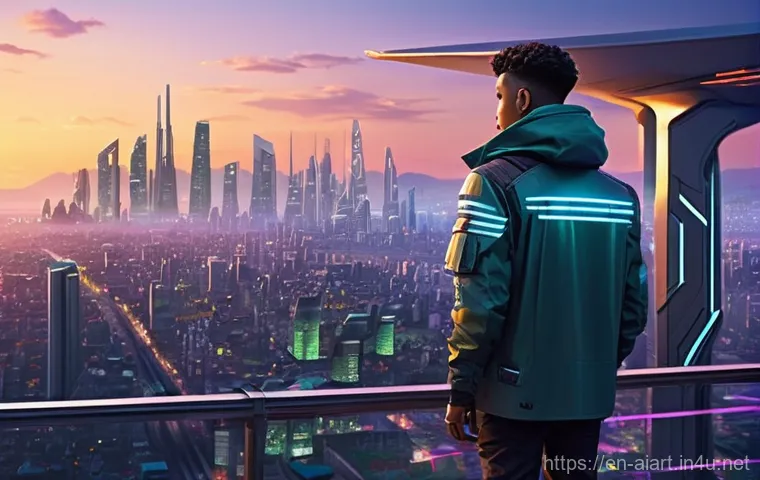
That’s exactly where AI shines in the early stages of the creative process. I’ve personally used tools where I can input a rough concept – say, “a futuristic city blending nature and technology” – and within seconds, get dozens of mood boards, architectural styles, and even preliminary 3D forms.
It’s like having an entire brainstorming team, ready to go 24/7. This isn’t about the AI *doing* the art; it’s about it serving as an inexhaustible wellspring of inspiration, providing unexpected combinations and fostering new artistic directions.
It can really help get the ball rolling, especially when a client’s brief is still a bit fuzzy, offering a multitude of options to explore before committing to a single path.
This quick exploration saves a ton of time and, honestly, a lot of creative frustration.
Rapid Prototyping and Iteration at Lightning Speed
The traditional process of concept art and 3D prototyping can be incredibly time-consuming. Sketching, modeling, texturing, rendering – it all adds up.
But with AI, that timeline gets drastically compressed. I’ve been experimenting with platforms like Meshy AI and Rodin, where you can literally transform text descriptions or even a simple 2D sketch into a detailed 3D model in minutes.
Think about that for a second: you describe “a grumpy, elderly wizard with a long beard and a pointy hat,” and *boom*, you have a base 3D model. It’s not always perfect right out of the gate, mind you; sometimes it needs a bit of cleanup or refinement.
But having that initial structure so quickly means you can iterate, adjust, and explore variations at a pace that was unimaginable just a few years ago.
This “test and refine” cycle is a game-changer, allowing me to focus on the artistic vision rather than getting bogged down in the technical minutiae of building every single polygon from scratch.
It truly empowers artists to be more flexible and adventurous with their designs.
Streamlining Artistic Workflows with Intelligent Automation
Automating Mundane and Repetitive Tasks
Let’s be real, a big chunk of any artistic process, especially in digital art and sculpting, involves tasks that are necessary but not particularly exhilarating.
Things like background removal, basic colorization, generating textures, or even cleaning up meshes can eat up hours. This is where AI truly acts as a silent assistant, taking on those routine chores and liberating artists to dive deeper into the imaginative and expressive aspects of their work.
I’ve personally found AI texturing tools incredibly useful. Instead of manually painting every surface detail, I can provide a prompt like “weathered stone, mossy, ancient” and watch as the AI generates high-quality, PBR-ready textures in seconds.
It’s a massive time-saver, not just for the initial application but also for generating variations if a client wants to see different material options.
This efficiency isn’t just about speed; it’s about reducing the mental load and allowing artists to dedicate more time to the truly creative parts of their projects.
Enhanced Precision and Technical Assistance
Beyond just automating simple tasks, AI is bringing a new level of precision and technical assistance to sculpting and modeling. Imagine having an AI analyze your initial sculpt and suggest improvements to topology, or automatically smooth out complex surfaces while maintaining detail.
Tools are becoming more immersive and intuitive, with AI assisting with real-time geometry generation and variational suggestions. For someone working on intricate character models or complex environmental assets, this kind of intelligent support is invaluable.
It helps in identifying potential structural weaknesses or areas for improvement in a design before significant time is invested. I’ve seen AI-powered tools that can help with everything from optimizing mesh density for game engines to ensuring a model is watertight and ready for 3D printing.
It’s like having an expert technical director sitting right next to you, offering advice and executing complex operations with surgical accuracy. This means even artists who might struggle with the more technical aspects of 3D can achieve professional-grade results.
Redefining Collaboration: Human Intuition Meets Machine Power
The Rise of the “Centaur Creator”
The term “centaur” was originally used in chess to describe humans working with AI to outperform both grandmasters and computers alone. I think it perfectly captures what’s happening in art right now.
It’s not about humans vs. AI; it’s about humans *with* AI. We bring the context, the emotion, the purpose, and the unique artistic vision.
The AI brings the computational power, the ability to process vast amounts of data, and the speed to generate endless possibilities. This synergistic relationship allows for a level of creative output that neither could achieve independently.
I’ve felt this firsthand when I’ve used AI to generate initial ideas, then taken those concepts and imbued them with my personal artistic sensibility, refining them and adding the subtle nuances that only a human can truly appreciate.
It’s a powerful partnership that truly extends what’s possible in artistic expression. The future of human-AI collaboration will likely emphasize personalization and adaptability, with systems better understanding individual creative processes.
Breaking Barriers and Democratizing Art Creation
One of the most exciting aspects of this AI revolution is how it’s democratizing access to art creation. For years, becoming proficient in digital sculpting or complex 3D modeling required extensive training, expensive software, and a significant time commitment.
Now, with intuitive AI-powered tools, individuals without formal training can experiment with artistic styles and generate high-quality visuals. I’ve talked to so many aspiring artists who felt intimidated by traditional software, but now they’re creating incredible things using simple text prompts or by quickly converting a 2D sketch into a 3D object.
This expanded accessibility means more diverse voices are entering the art world, leading to an explosion of fresh ideas and unique perspectives. It’s not just about making art easier; it’s about giving creative power to a much wider audience, fostering inclusivity and innovation across the board.
It feels like the playing field is leveling out, and that’s genuinely thrilling to witness.
Navigating the Ethical Landscape and Embracing Ownership
Addressing Authenticity and Ownership
Okay, so let’s talk about the elephant in the room: authenticity and ownership. These are crucial questions that naturally arise when machines are involved in creating art.
Is it still “art” if an AI generated it? Who owns the copyright? These debates are essential, and as artists, we need to be part of the conversation.
Many tools now explicitly state that you maintain full ownership of the assets and models you create with their platforms, and they don’t use your training data to train other models.
This clear stance on ownership is something I always look for, because as much as I love using these tools, my unique vision and the work I put into shaping the AI’s output should absolutely remain mine.
It’s about ensuring that the human element of curation, selection, and refinement remains paramount. We’re not just passive observers; we’re the directors, the visionaries, giving meaning and purpose to the AI’s output.
The Importance of Ethical AI Development
Beyond personal ownership, there’s a broader conversation about ethical AI development that we can’t ignore. We need to consider how AI models are trained – are they scraping images without proper licensing?
Are there biases in the data they’re trained on that could inadvertently perpetuate harmful stereotypes in the art they create? These are serious concerns.
As artists and consumers of these tools, we have a responsibility to advocate for transparency and accountability from AI developers. It’s about ensuring that AI is used to *enhance* human creativity, not devalue it or lead to job displacement.
The goal should be to create tools that complement and augment human abilities, ensuring they are ethical, adaptable, and capable of continuous learning and improvement.
This means developers need to design interfaces that empower human creativity rather than overshadow it.
Future Frontiers: Immersive Experiences and Intelligent Interaction
Generative Design for Immersive Worlds
Imagine stepping into a virtual world where every tree, rock, and building was uniquely generated by AI, yet perfectly cohesive with the overall artistic direction.
That’s not science fiction anymore; it’s the exciting frontier of generative design applied to immersive experiences. AI’s ability to create complex, detailed environments and assets on the fly means that game developers and VR/AR creators can build incredibly rich and expansive worlds with unprecedented efficiency.
I’ve seen demos where artists can describe entire landscapes or futuristic cityscapes, and the AI generates them, ready to be explored. This means we can move beyond static, pre-rendered environments to dynamic, ever-changing digital spaces that react and adapt, offering truly personalized and hyper-realistic experiences.
This opens up new possibilities for storytelling and interaction, making digital art more alive than ever before.
Real-time Sculpting and Personalized Feedback
The evolution of AI in digital sculpting isn’t just about faster initial generation; it’s about real-time, intelligent interaction. Imagine sculpting in VR with tools that anticipate your next move, suggest design refinements based on your artistic style, or even help with complex animation rigging.
We’re already seeing advancements in tools that offer real-time 3D sculpting with AI assistance. The idea that AI could learn my personal artistic preferences and offer genuinely helpful, personalized feedback – not just generic suggestions – is incredibly exciting.
It’s moving beyond just a tool to a true creative partner that understands and adapts to my individual creative process. This level of nuanced interaction promises to make digital sculpting even more intuitive and powerful, allowing artists to push their boundaries while maintaining their unique voice and vision.
| AI Tool Category | Key Benefits for Artists | Example Tools/Concepts |
|---|---|---|
| Concept Generation | Rapid idea exploration, overcoming creative blocks, diverse inspiration. | Text-to-Image Generators (e.g., Midjourney, DALL-E), AI Mood Board Creators |
| 3D Model Generation | Quickly turn text/images into base 3D models, fast prototyping, asset creation. | Meshy AI, Rodin (Hyper3D), Spline, 3D AI Studio, Luma AI Genie |
| Workflow Automation | Automate repetitive tasks like texturing, color correction, mesh cleanup, background removal. | AI Texturing (e.g., Ponzu), AI-powered image editing features in tools like Adobe Firefly |
| Technical Assistance | Optimizing geometry, real-time sculpting assistance, structural integrity checks. | AI-powered mesh optimization, virtual reality sculpting tools with AI helpers |
| Immersive Environment Creation | Generating expansive, dynamic virtual worlds and scenes from prompts. | Generative design for game environments, VR/AR asset creation |
The Artist’s Evolving Role in an AI-Augmented World
From Sole Creator to Visionary Director
In this rapidly evolving landscape, I truly believe the artist’s role isn’t diminished, but rather elevated. We’re moving from being solely the hands-on creator to a visionary director, a curator, and a conceptual architect.
While AI can generate forms and images, it’s the human artist who provides the critical eye, the emotional resonance, and the overarching narrative. We select the best AI outputs, refine them, combine them, and infuse them with the unique human touch that gives art its meaning and purpose.
It’s a shift from painstaking manual labor to intelligent guidance and critical decision-making. I’ve found that my focus has shifted more towards the “why” and “what if” rather than just the “how.” It’s about asking the right questions, guiding the AI, and then meticulously crafting the final piece to reflect a deeper artistic intention.
This is where true creativity lies – in the intent, the context, and the transformation, not just the output.
Mastering the New Tools and Adapting Skillsets
Just like painters learned to master oils or digital artists embraced Photoshop, today’s creators need to embrace AI as part of their toolkit. This means adapting our skillsets, not abandoning them.
Understanding how to effectively prompt an AI, how to refine its output, and how to integrate AI-generated elements into a larger workflow are becoming essential skills.
I’ve invested time in learning the nuances of different AI platforms, understanding their strengths and weaknesses, and discovering how they can best serve my creative process.
It’s about continuous learning and being open to new methodologies. This doesn’t mean art fundamentals become irrelevant; quite the opposite! A strong grasp of composition, color theory, anatomy, and storytelling makes you an even more effective AI director, enabling you to guide the AI towards truly exceptional results and to discern quality from noise.
The ability to blend traditional artistic principles with cutting-edge technology is, in my opinion, the hallmark of the successful artist in this new era.
Wrapping Things Up
Wow, what a journey we’ve had exploring the incredible world of AI in digital art and sculpting! It’s truly amazing to see how quickly these tools are evolving, opening up so many new avenues for us creators.
I’ve personally experienced how AI can be this fantastic co-pilot, helping to banish creative blocks and supercharge our workflows. It’s not just about speed, it’s about having the freedom to push boundaries and bring our wildest visions to life with an efficiency that felt impossible just a few years ago.
This really is a thrilling time to be an artist. Embracing these technologies isn’t about replacing our innate human creativity, but about amplifying it.
It’s about leveraging powerful tools to tell richer stories, craft more intricate worlds, and connect with audiences in ways we’re only just beginning to imagine.
So, keep experimenting, keep learning, and most importantly, keep creating with that unique spark that only you possess! The future of art is collaborative, exciting, and full of limitless potential.
Useful Information to Know
1. Master Prompt Engineering: Learning how to give clear, detailed prompts to AI tools is probably one of the most valuable skills you can develop right now. Think of it as learning a new language to communicate with your creative partner. The more precise you are, the better the AI can understand and execute your vision, allowing you to maintain creative control and get exactly the results you need. Don’t be afraid to experiment with different phrasing, styles, and parameters to see how the AI responds and discover its capabilities.
2. Diversify Your Monetization Strategies: As a digital artist in the AI era, there are so many ways to turn your creations into income. Beyond traditional commissions, consider selling your AI-generated art on print-on-demand platforms like Redbubble or Society6, licensing your images as stock photos on platforms like Adobe Stock, or even creating digital products like themed wallpapers or social media content packs for platforms like Gumroad or Etsy. Exploring various income streams can provide a more stable and scalable revenue.
3. Prioritize Ethical AI Use and Ownership: It’s absolutely crucial to choose AI platforms that have clear policies on data usage and ownership. Always ensure that the assets you create using these tools remain *your* intellectual property. Furthermore, be mindful of potential biases in AI-generated content and strive for transparency when AI is used in your work, especially in commercial contexts. This helps maintain trust with your audience and contributes to a more responsible AI art community.
4. Continuous Learning is Key: The AI landscape is changing at lightning speed. What’s cutting-edge today might be standard practice tomorrow. Dedicate time to staying updated on new tools, techniques, and ethical discussions. Follow AI art communities, experiment with different software (many offer free trials!), and don’t hesitate to take online courses. Platforms like Udemy and Coursera offer excellent resources, often with free options, to help you understand how AI works and integrate it effectively into your creative process.
5. Embrace AI as a Collaborator, Not a Replacement: View AI as a powerful assistant that takes on mundane tasks, sparks new ideas, and accelerates your workflow. Your unique human intuition, emotional depth, and artistic vision are irreplaceable. The true magic happens when you blend AI’s computational power with your creative direction, resulting in “centaur creations” that push the boundaries of what’s possible and allow you to focus more on the “why” of your art.
Key Takeaways
The integration of AI in digital art is not just a trend; it’s a fundamental shift empowering artists to work smarter, faster, and more creatively. It automates repetitive tasks, sparks boundless inspiration for concept generation, and streamlines the entire workflow. However, it also brings essential discussions around ethics, ownership, and the evolving role of the artist as a visionary director. By actively engaging with these tools, continuously learning, and advocating for responsible AI development, artists can truly thrive in this exciting, AI-augmented creative landscape.
Frequently Asked Questions (FAQ) 📖
Q: How exactly is
A: I revolutionizing the digital art and sculpting process for us creators? A1: Oh, this is a fantastic question, and one I get asked all the time! From my own experience and what I’ve observed in the community, AI isn’t just a fancy new filter; it’s fundamentally changing our workflow in ways that feel almost like magic.
For digital sculptors, imagine turning a rough sketch or even just a few descriptive words into a fully realized 3D model in minutes. That’s not science fiction anymore!
I’ve personally used tools that take a basic concept and generate multiple variations, allowing me to iterate on ideas faster than ever before. This means less time on the tedious, repetitive parts of sculpting and more time refining the truly unique, expressive elements.
For digital painting, AI can assist with everything from generating complex textures and backgrounds to suggesting color palettes and even helping with realistic lighting.
It frees up so much mental energy that we used to spend on grunt work, allowing us to focus on the bigger artistic vision and truly push creative boundaries.
It’s like having an incredibly efficient, tireless assistant who understands your aesthetic.
Q: It sounds amazing, but is getting started with
A: I-powered art and sculpting super complicated, especially for someone who’s just dipping their toes in? A2: I totally get that apprehension! When I first heard about AI in art, my immediate thought was, “Oh no, another steep learning curve!” But honestly, that couldn’t be further from the truth today.
The beauty of this current wave of AI tools is their incredible accessibility. Developers are making them more user-friendly than ever, often with intuitive interfaces that even a complete beginner can navigate.
Many platforms offer simple text-to-image or text-to-3D prompts, meaning if you can describe your idea, you can create it. You don’t need to be a coding wizard or a tech genius.
I’ve seen countless artists, myself included, jump in with minimal prior experience and start producing genuinely impressive work within hours. There are tons of online tutorials, vibrant community forums, and even free trials for many of these tools, making the entry barrier surprisingly low.
My advice? Just pick one tool that catches your eye and start playing around. You’ll be amazed at how quickly you pick it up!
Q: With
A: I becoming such a powerful co-creator, what happens to the human artist’s unique touch and the whole idea of “authenticity” in art? A3: This is probably the most thought-provoking question, and one that touches on the very soul of art.
My take on it, after seeing so many incredible artists embrace these tools, is that AI isn’t replacing the human touch; it’s amplifying it. Think of it less as the AI creating the art and more as an advanced brush or chisel that allows you to express your vision with unprecedented speed and precision.
The human artist remains the conductor of the orchestra, the visionary who conceives the initial spark, makes the crucial artistic decisions, and guides the AI toward their unique aesthetic.
Authenticity, to me, isn’t just about the method of creation, but the intention and the story behind the art. When an artist uses AI as a tool to bring a deeply personal vision to life, the authenticity comes from their unique perspective, their choices, and their emotional input.
The human element isn’t diminished; it’s simply evolving. We’re moving into an era of incredible collaboration where our creativity is supercharged, allowing us to focus on the heart and soul of our work.